

500K
Number of articles migrated from the legacy CMS to WordPress, including content, taxonomies, media, and redirects.
58
Total days in the initial launch timeline to complete design, development, CMS platform migration, testing and launch.
Building a Smarter, Faster, and More Flexible Platform
Trusted satire demands a publishing platform that’s fast, flexible, and built for editorial velocity. When The Onion partnered with Unrelated and MG Strategy + Design, the goal was clear: migrate a massive archive of content into a modern WordPress platform and turn real-world publishing needs into tools that power editorial workflows.
The Onion’s legacy content — hundreds of thousands of articles, tags, multimedia embeds, and nuanced URLs — needed to move from an older system into WordPress without loss of editorial context or search integrity. We implemented a data-first migration service that preserved content structure, authorship, keywords, and syndicated metadata while enabling new editorial features.
At the same time, we rethought The Onion’s core publishing tools. Rather than forcing legacy workflows into rigid templates, we used Amplify’s modular framework to build an extensible query and layout toolkit that adapts to editorial intent. Features like custom query blocks, flexible card layouts, and filter controls give editors the power to sculpt feeds, landing pages, and topic collections without code.
Together, the migration and new block tools gave The Onion:
- A scalable WordPress foundation ready for rapid publishing cadence.
- Design-agnostic components that can be reused across editorial sites.
- Searchable, semantically rich content that works for editors and audiences alike.
Fast, Comprehensive Migration
Migrating The Onion took deliberate engineering precision:
- Preserved 500,000+ articles with full fidelity to original metadata.
- Translated legacy URLs into consistent, SEO-friendly WordPress permalinks.
- Converted embeds and media to a unified content model for consistency and performance.
- Built automated scripts to reduce manual QA and avoid content loss.
The result: a seamless transition from legacy architecture into a future-proof publishing system.
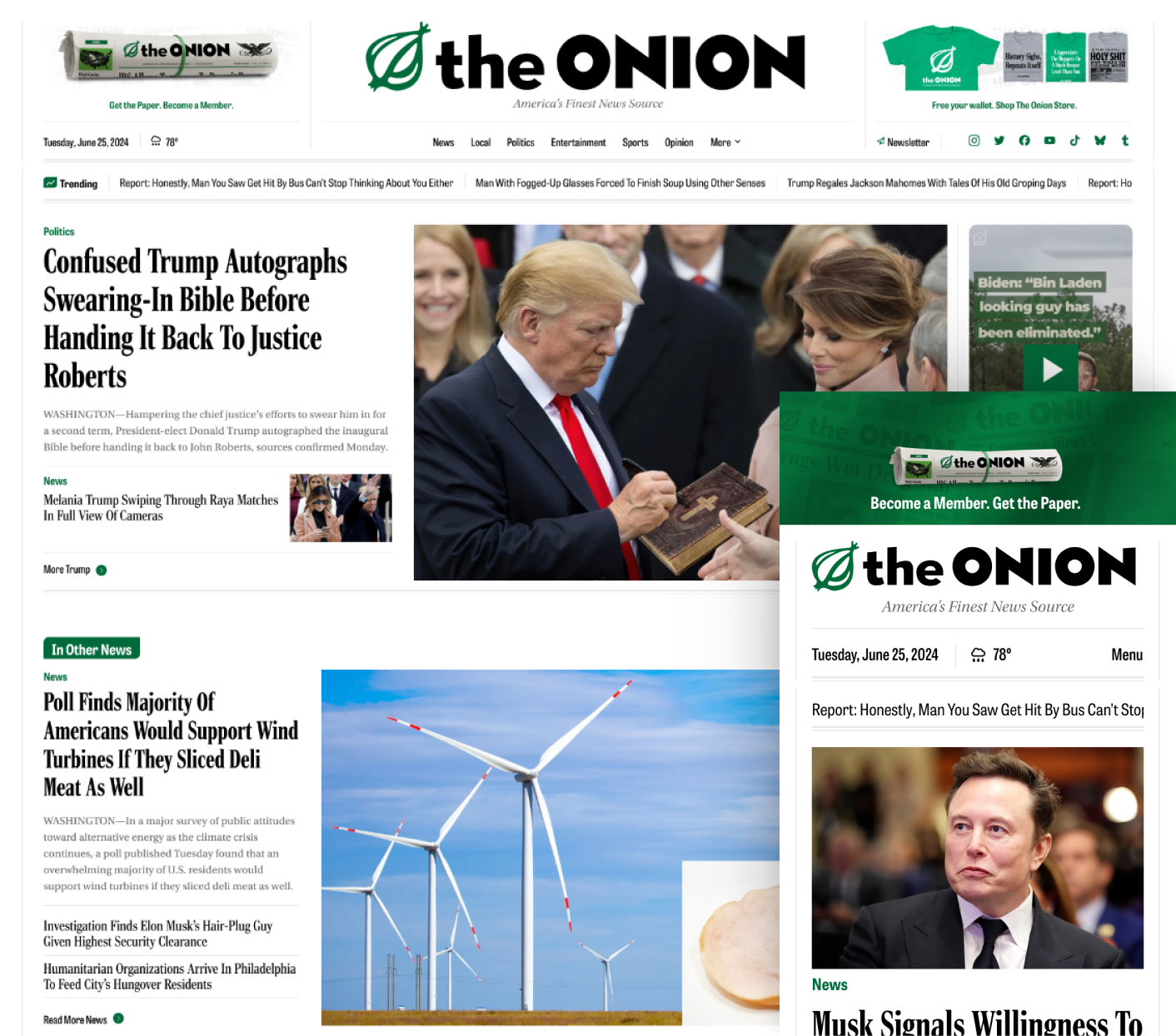
Powered by Amplify
Unrelated’s Amplify framework served as the technical backbone of this project. As part of the build, we:
- Extended WordPress with custom blocks tailored to news publishing workflows, including query blocks with filtering and sorting controls driven by editorial needs.
- Built a flexible layout system that decouples presentation from content, letting editors create landing pages without developer involvement.
- Developed reusable patterns now available across other Amplify-based builds, reducing time and cost for future clients.
Amplify is not a theme — it’s a platform layer. Every component created for The Onion strengthened the shared foundation, improving performance and editorial autonomy for the entire client ecosystem.
-

“Building our site on Amplify was truly one of the best experiences of my career. The Unrelated team was respectful of the unique constrictions of The Onion’s voicing, and they provided a wealth of knowledge to make this iteration of The Onion website and paper the truest expression of our vision in our history.”
Custom Queries Built for Real Editorial Work
The Onion’s archive isn’t just large—it’s editorially complex. Decades of content needed to be sortable by date, relevance, format, and context in ways traditional WordPress queries don’t support out of the box.
To meet that challenge, we engineered a new set of custom query filters within Amplify. These tools allow editors to surface content based on time ranges, historical context, and editorial intent—without relying on hard-coded templates or custom development for each use case.
- Create date-driven archive views across decades of content
- Curate story collections tied to real-world events
- Reorder and reshape feeds without developer involvement
What began as a solution for one of the largest satire archives on the web is now a core part of the Amplify platform. These tools give editors precision without complexity—and they now ship as standard features for all Amplify clients.






Accessibility & Performance that Scales
Accessibility was treated as a core design principle, not an afterthought. From thoughtful color contrast and full keyboard support to clean semantic markup and carefully applied ARIA attributes, every template and component was designed to meet — and in many cases exceed — WCAG 2.1 AA standards.
That rigor carries forward as the site evolves. Because The Onion’s custom Gutenberg blocks were built and tested with accessibility in mind, editors can publish new stories, galleries, and features with confidence, knowing inclusive patterns are baked in by default.
The Onion’s content is visually driven and structurally complex. Pages often feature large hero images, illustrations, multi-story layouts, and media-dense templates that demand serious performance consideration. To keep pages fast and responsive, optimization was addressed across the entire stack.
- Images are lazy-loaded so heavy visuals never slow initial rendering.
- Next-generation image formats significantly reduce file sizes without sacrificing quality.
- Scripts are loaded selectively, ensuring each page only delivers what it actually needs.
- Server-side rendering and aggressive caching keep load times snappy, even under high traffic.
The result is a site that delivers sharp visuals and rich storytelling while consistently scoring high in Google Lighthouse — proof that performance and media-heavy design don’t have to be at odds.


Our Long-term Partnership
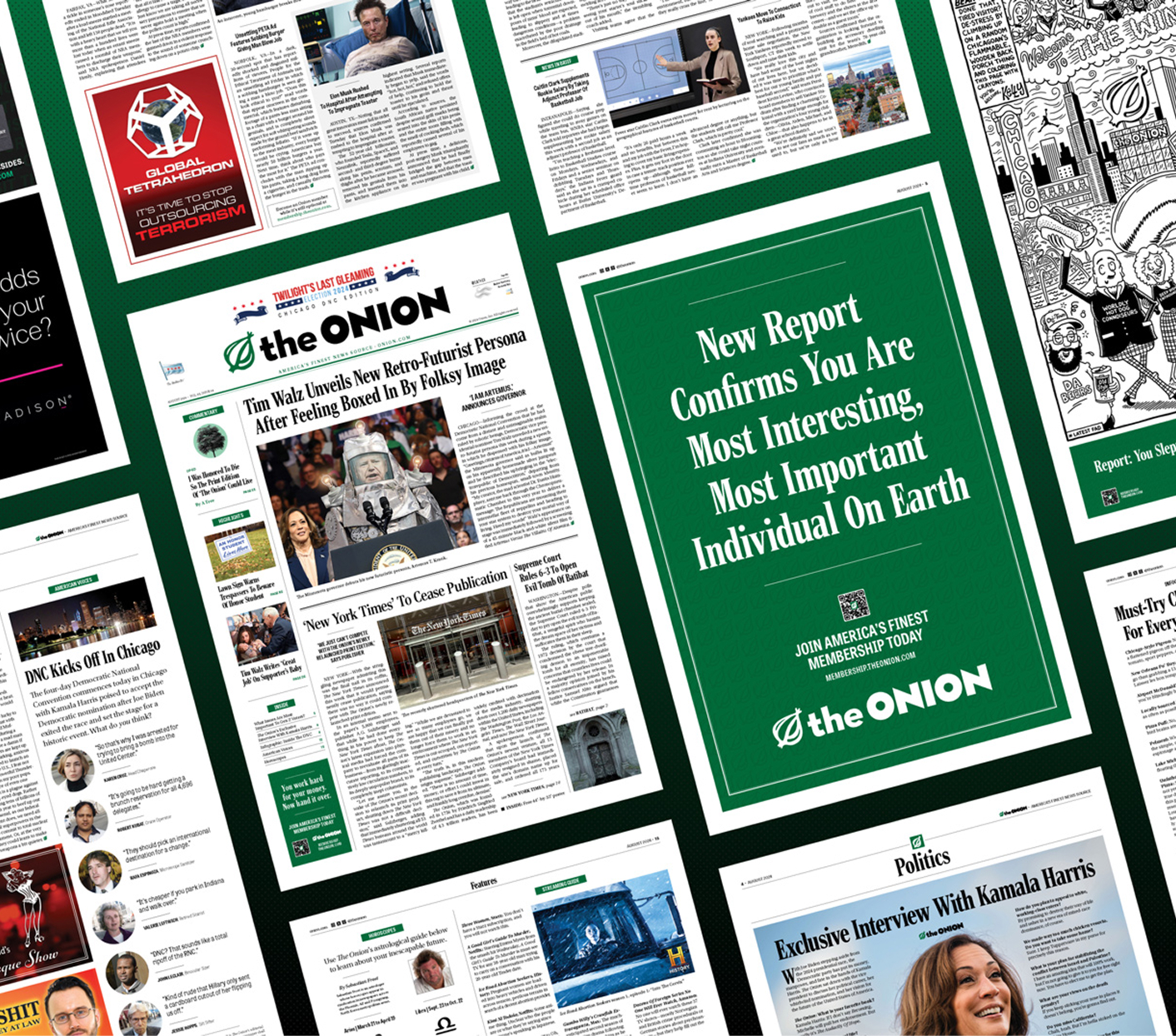
Our partnership with The Onion spans print and digital—and it’s been recognized along the way.
Working alongside MG Strategy + Design, we support the design and production of The Onion’s monthly newspaper, contributing to work that has earned three Society for News Design Awards of Excellence for page design, including honors for the Election 2024 issue and Trump’s First 100 Days.
That award-winning print work directly informs how we approach the digital platform: how stories are structured, how systems surface content, and how layouts stay flexible under real editorial pressure. Lessons from the newsroom continue to shape new Gutenberg blocks, reusable templates, and performance-driven publishing tools.
Together, print and digital reinforce one another—ensuring The Onion remains unmistakable, fast, and adaptable as its archive and audience continue to grow.